


The Pittsburgh Steelers, one of the most storied franchises in the history of the National Football League, were founded in 1933 as the Pittsburgh Pirates by Art Rooney. Since their inception, the Steelers have become synonymous with toughness, resilience, and championship success. The team’s journey from humble beginnings to becoming an NFL powerhouse is a tale of perseverance, innovation, and unwavering fan loyalty.
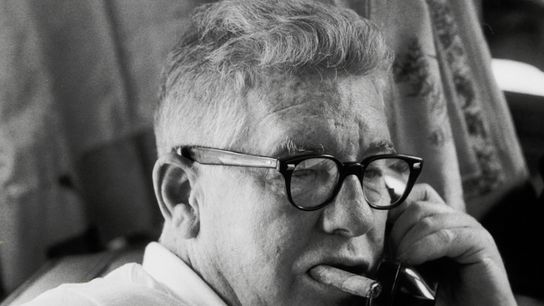
Steelers.com
Steelers Founder Art Rooney relaxes with a cigar in hand while engaged in a phone conversation, effortlessly balancing tradition and leadership.
The Steelers are renowned for having one of the most passionate and dedicated fan bases in all of sports—not just in the NFL, not just in American sports, but across the entire world. This is particularly remarkable considering that football has traditionally been a domestic game, with global expansion efforts only gaining momentum in recent years. Yet, despite that, the Steelers have built an international following that few teams can rival.
When you think of the Steelers, you think of six Super Bowls, the legendary dynasty of the 1970s, and the incredible stability of having just three head coaches since 1969. The way the Steelers operate is unlike any other franchise, adding to their mystique and the rich lore surrounding them.
Trying to capture the full scope of Steelers history is nearly impossible. They’ve produced countless Hall of Famers, delivered unforgettable moments, and sustained a level of success that many other franchises can only dream of. While they enter the 2025 season still searching for their first playoff victory since the 2016 season, their legacy remains one of championship pedigree, historic triumphs, and a standard of excellence that defines the franchise.
Steelers’ Founding Years (1933-1949)
In 1933, Art Rooney made a historic move by paying a modest $2,500 franchise fee to establish Pittsburgh’s first professional football team, laying the foundation for what would become one of the most iconic franchises in the NFL. The $2,500 investment would go on to prove to be very fruitful for the Rooney family.
Initially named the Pittsburgh Pirates, the team faced numerous challenges in its early years, struggling to find success on the field and consistently finishing near the bottom of the standings. The Pirates struggled and knew they needed to make big time improvements.
Despite these setbacks, the organization remained committed to building a competitive team. In 1940, in an effort to reflect the city’s strong ties to the steel industry, the team officially changed its name to the Pittsburgh Steelers, a moniker that would become synonymous with hard-hitting football and blue-collar pride.
The challenges continued throughout the years, especially during World War II, when the team faced both financial struggles and a severe shortage of players. The war effort took many young men away from professional sports, and the Steelers, like other teams, felt the effects. To keep the franchise afloat, the team entered into temporary mergers with other teams in the league. In 1943, the Steelers merged with the Philadelphia Eagles to form the "Steagles," a creative solution that allowed both teams to continue playing despite the limited number of available players.
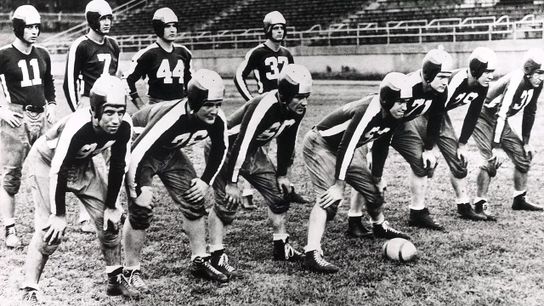
Eagles.com
The Steagles, a temporary merger between the Pittsburgh Steelers and Philadelphia Eagles during the 1943 season due to player shortages from World War II, are seen here during a practice session, navigating the unique challenges of combining two teams into one as they worked toward an unforgettable chapter in NFL history.
The following year, in 1944, the Steelers again found a temporary solution by merging with the Chicago Cardinals. These temporary alliances helped preserve professional football in Pittsburgh during one of the most challenging times in history, ensuring that the sport would survive through the adversity of wartime and continue to grow in the years that followed.
Building The Foundation Of The Steelers’ Fortunes (1950-1968)
The post-war era for the Steelers was marked by continued struggles and setbacks, with the team failing to make significant strides in improving its fortunes. Despite the growing popularity of the NFL in the 1950s and early 1960s, the Steelers found themselves unable to find consistent success on the field.
The franchise went through a number of head coaches during this period, but none were able to establish the winning culture necessary to make the team a serious contender. The lack of stability at the coaching position led to inconsistent performance and kept the Steelers from reaching their full potential.
While the team did manage to draft some talented players, including Hall of Famer Ernie Stautner, who was a standout defensive player, these individual efforts were not enough to push the team into playoff contention. The Steelers were often plagued by a lack of cohesion and failed to develop a strong, unified roster capable of competing at a high level. As a result, the team continued to miss the playoffs year after year, leaving both the players and fans frustrated. The franchise was in desperate need of a transformative change that would turn its fortunes around.
In 1969, the Steelers made one of the most important decisions in the history of the franchise by hiring Chuck Noll as their new head coach. Noll’s arrival marked the beginning of a new era, one that would eventually lead to the team becoming one of the most successful and storied franchises in NFL history. Noll’s emphasis on discipline, meticulous scouting, and a commitment to player development laid the foundation for the Steelers’ future success.
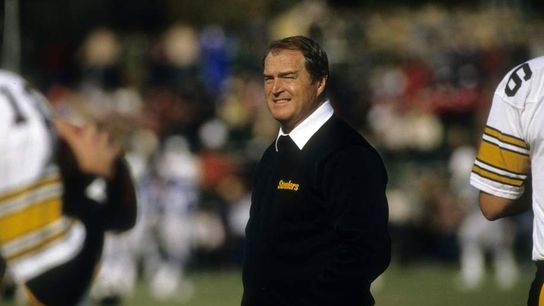
Tribune-Review
Steelers legendary head coach, Chuck Noll before a game.
His vision and leadership would go on to shape the team into a dominant force, helping them build the strong and talented roster needed to compete for championships in the years to come. Had the Steelers never hired Noll, there’s no telling where they would be as a franchise today.
Steelers And The Steel Curtain Dynasty (1970-1989)
The 1970s marked the dawn of a new era for the Steelers, as they began their rise to dominance in the NFL. Under the leadership of Noll, the team transformed from perennial underperformers to one of the most powerful forces in football. Noll’s ability to draft exceptional talent and develop a winning culture laid the foundation for what would become one of the greatest dynasties in NFL history.
The Steelers built their legacy by acquiring Hall of Famers who would go on to shape the team’s success for years to come. Key figures such as Terry Bradshaw, Joe Greene, Jack Lambert, Franco Harris, Lynn Swann, John Stallworth, and Mike Webster became the backbone of a powerhouse team, each contributing to the franchise's dominance in unique and unforgettable ways.
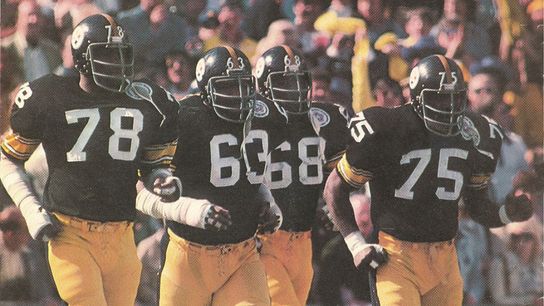
Steelers.com
The Steelers' Steel Curtain—Dwight White, Ernie Holmes, L.C. Greenwood, and Joe Greene—stands as one of the most dominant defensive lines in NFL history, a force that struck fear into opponents and played a crucial role in Pittsburgh’s four Super Bowl victories during the 1970s.
From 1974 to 1979, the Steelers went on an unprecedented run, winning four Super Bowls in just six seasons. This remarkable achievement made them the first team in NFL history to accomplish such a feat. The Steel Curtain defense, led by the imposing Greene, the hard-hitting Lambert, and the shutdown cornerback Mel Blount, became a feared and respected unit across the league.
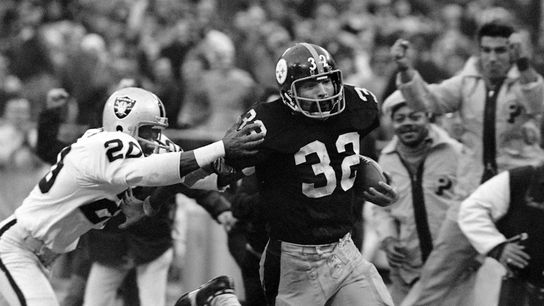
Their suffocating defense, which stifled opposing offenses and set the tone for every game, was a major reason for the team's success. Offensively, Bradshaw emerged as a clutch performer in the biggest moments, proving to be the ideal leader for the team. Harris’ legendary "Immaculate Reception" in 1972 also became one of the most iconic and memorable plays in NFL history, capturing the imagination of fans and solidifying his place in Steelers lore.
Steelers.com
Franco Harris rumbling his way to the game-winning score in the Steelers' AFC Divisional win over the Oakland Raiders.
However, as the 1980s began, the team started to age, and the once-dominant roster began to show signs of decline. Despite Noll remaining at the helm as head coach, he was unable to replicate the success that had defined the previous decade. The aging roster, coupled with a changing league, made it increasingly difficult for the Steelers to maintain their championship-caliber play.
By the late 1980s, the once-feared team was in desperate need of a rebuild, as the franchise looked to retool and find the next generation of talent to return to prominence. The 1980s marked the end of an era, but the success and legacy of the 1970s would continue to define the Steelers for years to come.
The Steelers Enter The Bill Cowher Era (1992-2006)
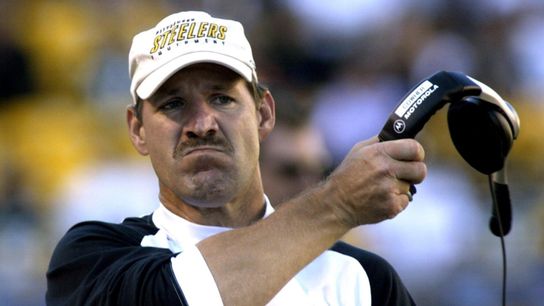
Following Noll’s retirement in 1991, the Steelers hired Bill Cowher, a fiery and passionate coach from Pittsburgh. Cowher quickly restored the Steelers' reputation as a hard-nosed, competitive team, leading them to the playoffs in his first six seasons.
Los Angeles Times
Steelers' former Head Coach Bill Cowher throws his headset off in anger, channeling his trademark intensity and passion that drove the team to victory and solidified his place as one of the most fiery and successful coaches in NFL history.
There was plenty of excitement surrounding the Cowher hire, but stepping in to replace a legend like Noll was an almost impossible task. Following a head coach who delivered four Super Bowl titles is one of the most daunting challenges in sports, yet Cowher managed to carve out his own legacy with remarkable success.
The 1995 season saw the Steelers reach Super Bowl XXX, but they fell to the Dallas Cowboys. The late 1990s featured strong teams led by players such as Jerome Bettis, Kevin Greene, and Carnell Lake, but they struggled to get over the championship hump.
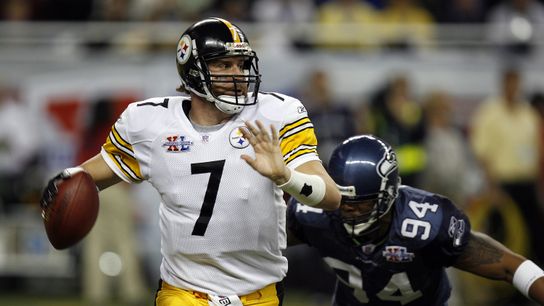
Finally, in the 2005 season, the Steelers captured their long-awaited fifth Super Bowl title. With Ben Roethlisberger at quarterback and a dominant defense featuring Troy Polamalu, James Farrior, and Joey Porter, the Steelers defeated the Seattle Seahawks in Super Bowl XL, sending Cowher out on a high note after the following season.
Allen Kee / Getty Images
Former Steelers quarterback Ben Roethlisberger (#7) escapes the pass rush and prepares to make a throw as Pittsburgh takes on the Seattle Seahawks during Super Bowl XL in Detroit, MI.
Had Cowher never won a Super Bowl, his legacy would undoubtedly be viewed differently. However, his tenure as head coach was undeniably successful, and he ultimately cemented his place in Steelers history by bringing the Lombardi Trophy back to Pittsburgh.
The Steelers Welcome In The Mike Tomlin Era And Continued Success (2007-Present)
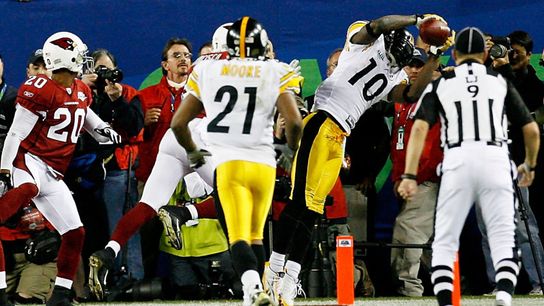
In 2007, Mike Tomlin was hired as head coach, becoming only the third Steelers head coach since 1969. Tomlin wasted no time making his mark, leading the Steelers to a Super Bowl victory in his second season. The Steelers won Super Bowl XLIII against the Arizona Cardinals in a thrilling game capped by Santonio Holmes’ legendary touchdown catch.
Kevin C. Cox / Getty Images
Pittsburgh Steelers former receiver Santonio Holmes makes the winning touchdown catch in Super Bowl XLIII.
The team returned to the Super Bowl in 2010 but fell short against the Green Bay Packers in Super Bowl XLV. Despite missing the championship stage in subsequent years, Tomlin has consistently led the Steelers to winning seasons and playoff appearances, demonstrating remarkable stability at the helm.
While Tomlin has enjoyed significant early and regular season success, the growing concern surrounding his legacy is his consistent underachievement in the playoffs. Some Steelers fans argue that his lone Super Bowl victory came with Cowher’s roster and that he has struggled to replicate that success with his own teams.
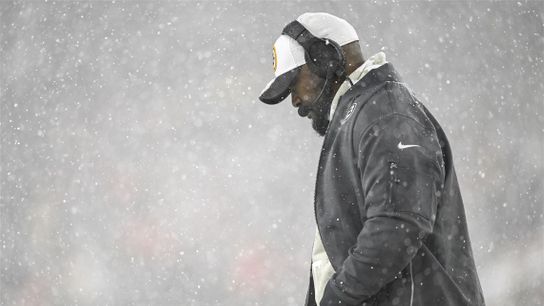
Benjamin B. Braun / Post-Gazette
Steelers' Mike Tomlin stands intently on the sidelines, watching the action unfold during a snowy game in Cleveland, as the harsh weather adds to the intensity of the AFC rivalry, reflecting his unwavering focus and leadership in any condition.
The criticism of Tomlin is not without merit. Many other head coaches would have been heavily scrutinized by the national media for a similar postseason track record, yet Tomlin has largely avoided that level of backlash. However, after the collapse of the 2024 season, the criticism intensified, and a growing number of Steelers fans are calling for a new direction.
Tomlin has been a great coach and is almost certain to be enshrined in the Hall of Fame, but his prolonged playoff struggles have become impossible to ignore. His legacy is still being written, and many Steelers fans remain hopeful that he can silence the doubters and restore the franchise to championship form. Until that happens, however, the questions about his legacy will only grow louder.
Steelers’ Legacy Lives On As One Of The Most Respected Franchises In The NFL
The Steelers remain one of the most respected and successful franchises in the NFL. With six Super Bowl titles, a commitment to continuity, and one of the most passionate fan bases in sports, the Steelers continue to be a model franchise.
Their success is built on core values of toughness, smart drafting, and a deep connection to their blue-collar roots. Whether it was the Steel Curtain of the 1970s, the smash-mouth football of the Cowher era, or the dynamic playmaking under Tomlin’s earlier years, the Steelers' legacy is one of excellence and resilience.
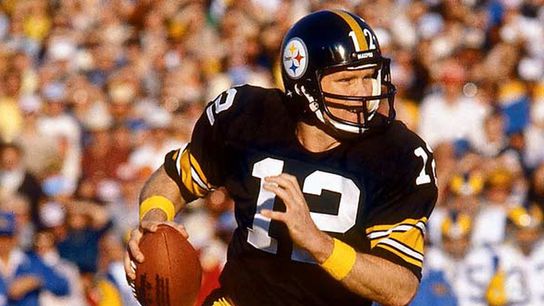
NFL Films
Steelers' Terry Bradshaw rolls out to throw the ball during the '70s.
From Rooney’s humble beginnings to becoming an NFL powerhouse, the Steelers' story is one of perseverance, adaptation, and triumph. As they continue to chase future Super Bowl glory, one thing remains certain: the Steelers are, and always will be, a pillar of professional football history.
Steelers Still Struggling To Recapture Super Bowl Success
The modern-day Steelers haven’t exactly thrilled their fans. Since Roethlisberger’s retirement, the team has struggled to find a true franchise quarterback, a problem that has only intensified over time. The Steelers have taken chances on several quarterbacks, including Mason Rudolph, Josh Dobbs, Mitchell Trubisky, Kenny Pickett, Russell Wilson and Justin Fields, but none have emerged as the long-term answer. Despite their efforts, they have yet to secure the future of the franchise at the most important position in football. And 2025 was no different after the Steelers signed future Hall of Famer quarterback Aaron Rodgers.
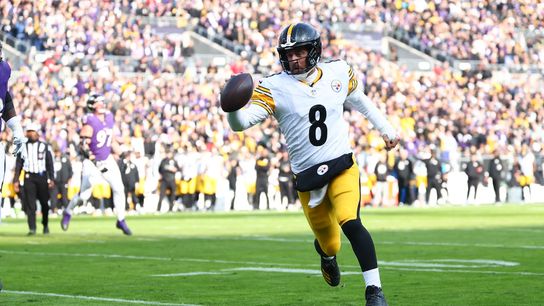
JARED WICKERHAM / GETTY IMAGES
Pittsburgh Steelers quarterback Aaron Rodgers (8) during a regular season game between the Pittsburgh Steelers and the Baltimore Ravens, Sunday, Dec. 7, 2025 in Baltimore, MD.
Meanwhile, frustration had extended beyond the quarterback carousel. Steelers fans, once unwavering in their support of Tomlin, started to turn on him during 2025. Tomlin, who was once universally admired for his leadership and ability to keep the team competitive, now was facing growing criticism.
Fans still respect his accomplishments, but patience was wearing thin during the 2025 season. While Steeler Nation has historically stood by their head coach, even the most loyal supporters were finding it increasingly difficult to ignore the team’s shortcomings.
As the Steelers entered another season with uncertainty under center and heightened expectations from their fan base, Tomlin faced one of the most challenging stretches of his tenure. During a game against the Buffalo Bills midway through the season, a second half collapse led to fans booing the legendary Renegade. But the fans weren't done yet. Chants of "Fire Tomlin...Fire Tomlin...Fire Tomlin" rang throughout the stadium.
Pittsburgh would pick up the pieces, though. After the loss at home to Buffalo, Pittsburgh would travel to Baltimore and beat the Ravens to take back the division lead after squandering a once commanding 3 game lead. Rodgers would be electric during the contest tossing one touchdown and rushing for another. Pittsburgh was back in the driver's seat, but it all came crashing down after a brutal defeat to the Browns in Cleveland during week 17.
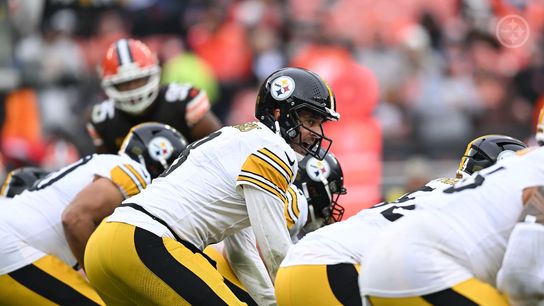
Karl Roster / Pittsburgh Steelers
Steelers quarterback Aaron Rodgers under center during Pittsburgh's 13-6 loss to the Cleveland Browns in Week 17 of the 2025 NFL Regular Season.
The loss to the Browns would set up one of the best games of the season. It was Baltimore and Pittsburgh round 2, and it wouldn't disappoint. After battling to take the lead late in the 4th quarter the Steelers season would come down to the leg of Ravens kicker, Tyler Loop. With an opportunity to beat the Steelers, Loop, would miss the go-ahead field goal as time expired giving the Steelers the AFC North title.
The hype in Pittsburgh was strong, but it would all come crashing down like so many seasons prior during the Wild Card round of the NFL playoffs. The Houston Texans defense would stifle Rodgers and the Steelers offensive attack all evening. Mustering only 2 field goals the Steelers would find themselves still searching for their first playoff win since the 2016 season after time ran out.
The Mike Tomlin Era Is Over
Mike Tomlin's 19-year tenure as head coach of the Pittsburgh Steelers (2007–2025) was defined by extraordinary consistency and success in one of the NFL's toughest divisions. Hired at age 34 to succeed Bill Cowher, he became the first black head coach in franchise history and quickly delivered results: In his second season, he guided the team to a 12–4 record and a thrilling victory in Super Bowl XLIII (27–23 over the Arizona Cardinals), becoming the youngest coach to win a Super Bowl at the time (age 36) and securing Pittsburgh's record sixth Lombardi Trophy. He returned to the big game in 2010 (a 31–25 loss to the Green Bay Packers in Super Bowl XLV), earned eight AFC North division titles, made 13 playoff appearances, and coached standout players like Roethlisberger, Harrison, and Troy Polamalu while preserving the Steelers' defensive identity through multiple roster transitions.
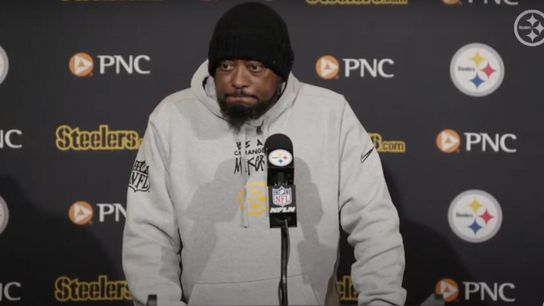
Pittsburgh Steelers / YouTube
Steelers' Mike Tomlin speaks to the media after a loss to the Eagles in Week 15
Tomlin's most remarkable achievement was never recording a losing season—finishing .500 or better every year, setting an NFL record for the longest streak of non-losing seasons to start a head coaching career (19) and extending the franchise's overall streak to 22. His regular-season record stood at 193–114–2 (.628 winning percentage), tying Chuck Noll for the most regular-season wins in Steelers history (193) in fewer seasons. Including playoffs, he amassed a 201–126–2 mark (.614), reached 200 career wins in 2025, and maintained perennial contention in the AFC North despite challenges like the post-Roethlisberger quarterback era. Early playoff success (including strong runs from 2007–2010) contrasted with later struggles—no postseason win in his final nine seasons, with several early exits fueling fan frustration.
Tomlin resigned on January 13, 2026, a day after a disappointing 30–6 Wild Card playoff loss to the Houston Texans following a 10–7 regular season in 2025. The decision surprised many, including owner Art Rooney II, who wanted him to continue despite two years left on his contract. At 53, Tomlin has no plans to coach in 2026 and may pursue television opportunities, though his competitive nature leaves the door open for a future return. His legacy endures as a bridge between the Cowher and post-Big Ben eras—marked by elite stability, culture-building, and one iconic title—making him one of the most respected and longest-tenured coaches in modern NFL history
Pittsburgh Native Mike McCarthy Hired (2026-)
After a short search Steelers ownership and General Manager Omar Khan decided on Pittsburgh native Mike McCarthy as the teams next head coach.
Last Updated: February 2026.